
Spawn
v. produce, invent, engender, create, generate, beget, develop, hatch, incubate, bring forth

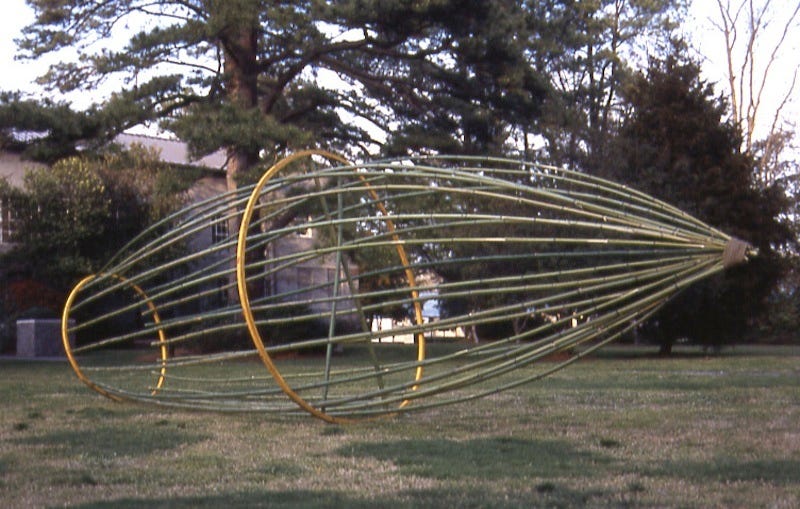
I am gonna open a door here and many of you will not want to go through that door with me. Those of you who have been along for this ride for many months will know that we’ve been following a more-or-less chronological path and as with any route, any exploration, there will always be the side track, the little road you could go down just to see what’s there, telling yourself that you can always come back to where you got off the main road, retrace your steps and pick up where you left off. But I have not offered those doors very often here. We all know the appeal of those little side trips, the possibility they present for enrichment, for discovering something unexpected, but they also distract from the main arc, The Story, as it were, the one your editor advises you to stick with so as not to lose your readers.
So this is not for everyone. But for those of you who are intrepid, I invite you to come along on a little diversion. It begins about where we are in the story, and I stumbled on it myself thanks to this ongoing memoir-type project I’m embarked on, stumbled on it by simply picking up one of my sketchbooks to check something, at which point I discovered that for this particular year, let’s say late 1998 to early 2000, I had filled four 100 page sketchbooks! Here’s why:
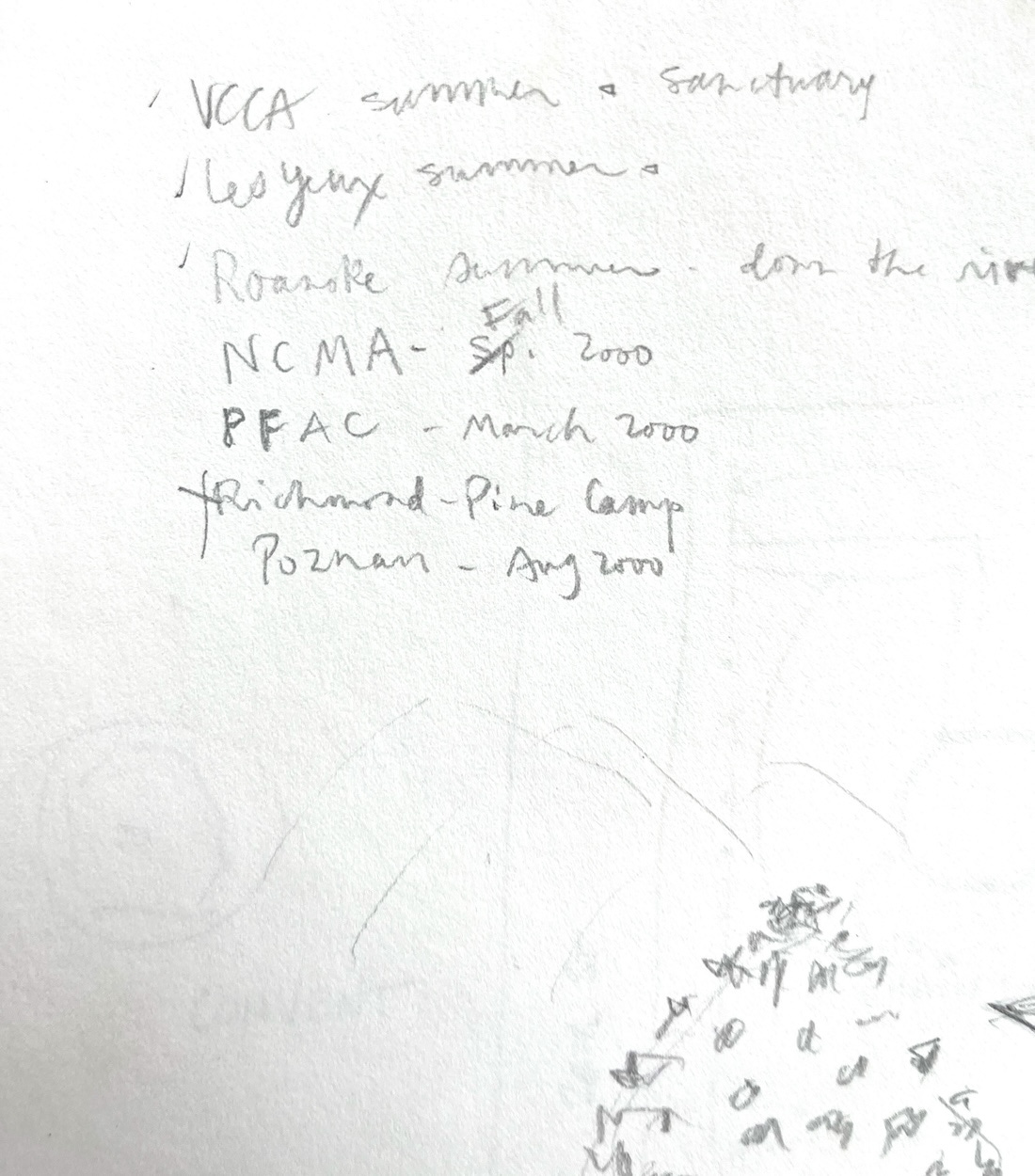
During that period I was working on major shows or commissions at the Art Museum of Western Virginia, the North Carolina Museum of Art, the VCCA, the Peninsula Fine Arts Center, and Second Street Gallery in Charlottesville, and I was doing proposals for an outdoor sculpture festival in Poland, a competition in Richmond, and a new park being developed in Amherst County. (Somehow I also drove with Sheila and our three girls from Virginia to San Francisco in late June)
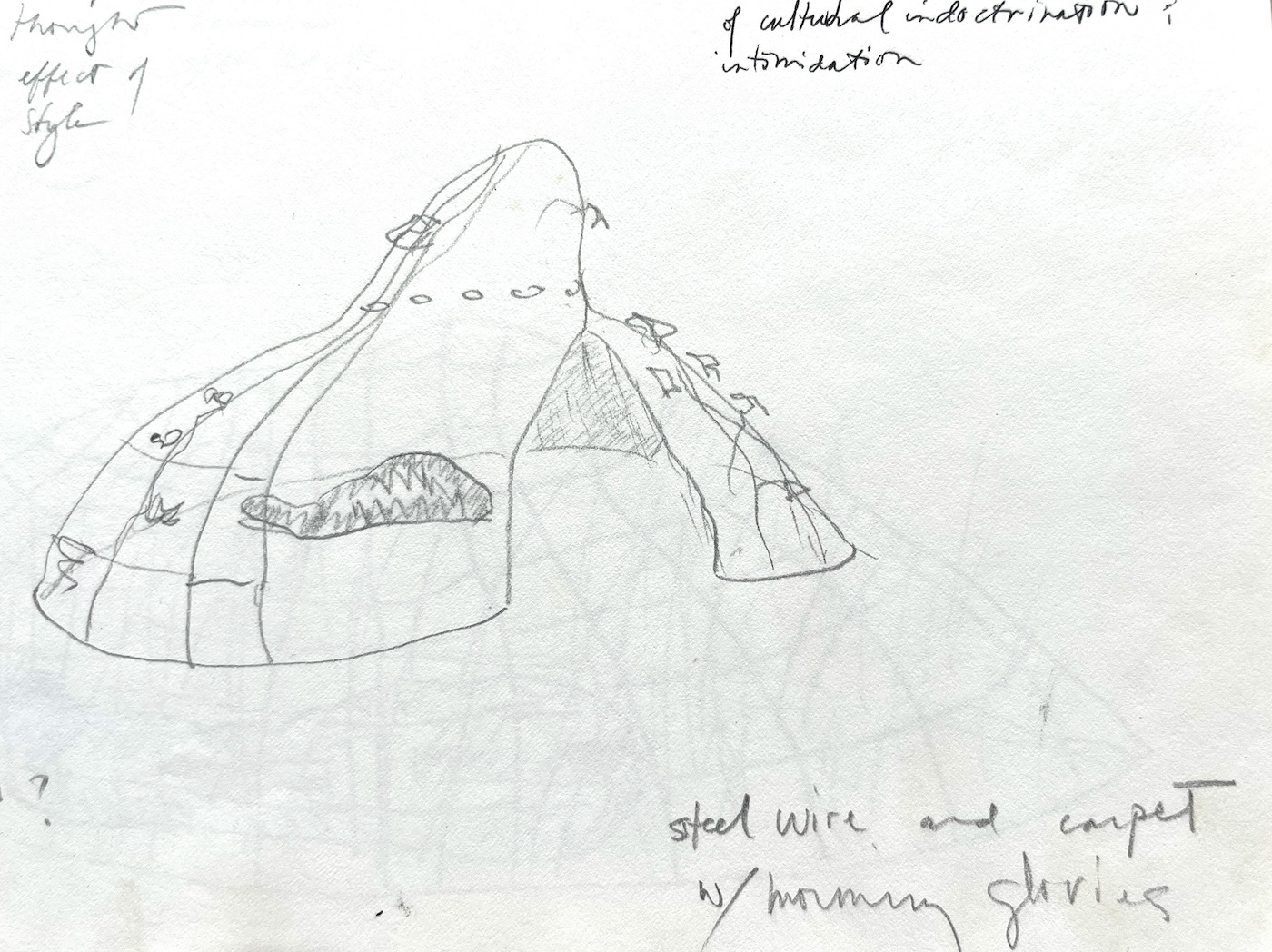
What I discovered in those sketchbooks was kinda unbelievable to me. I was developing ideas for artworks at a pace I can’t now imagine. I selected 145 of those sketchbook pages, took photos of them and downloaded them to my computer. For me, it is an enlightening peek into the artistic process; first and crucially, the permission to let oneself have dumb ideas, but then, what do you throw out, what gets another look, what gets an iteration or two, or three, and what artworks actually come out the other side. From these 100-plus ideas, I ended up making six or seven artworks. If you were to look closely at them all, you’d see the genesis of those few pieces, see how they changed as they got developed. I can’t put them all here, (“your post is nearing its length limit”) so I’ll look just at the commission for the Peninsula Fine Arts Center in Newport News.
For a few years, I had been fascinated with the indigenous people of Virginia from pre-contact, what is called the Eastern Woodland culture. The Mattaponi and the Pamunkey and the Chickahominy people, who lived along those rivers that flowed into the York and the James and created the peninsula at Newport News, created ingenious mechanisms for survival, including their woven huts and their woven fishing weirs. Beautiful objects I wanted to draw on and pay homage to.
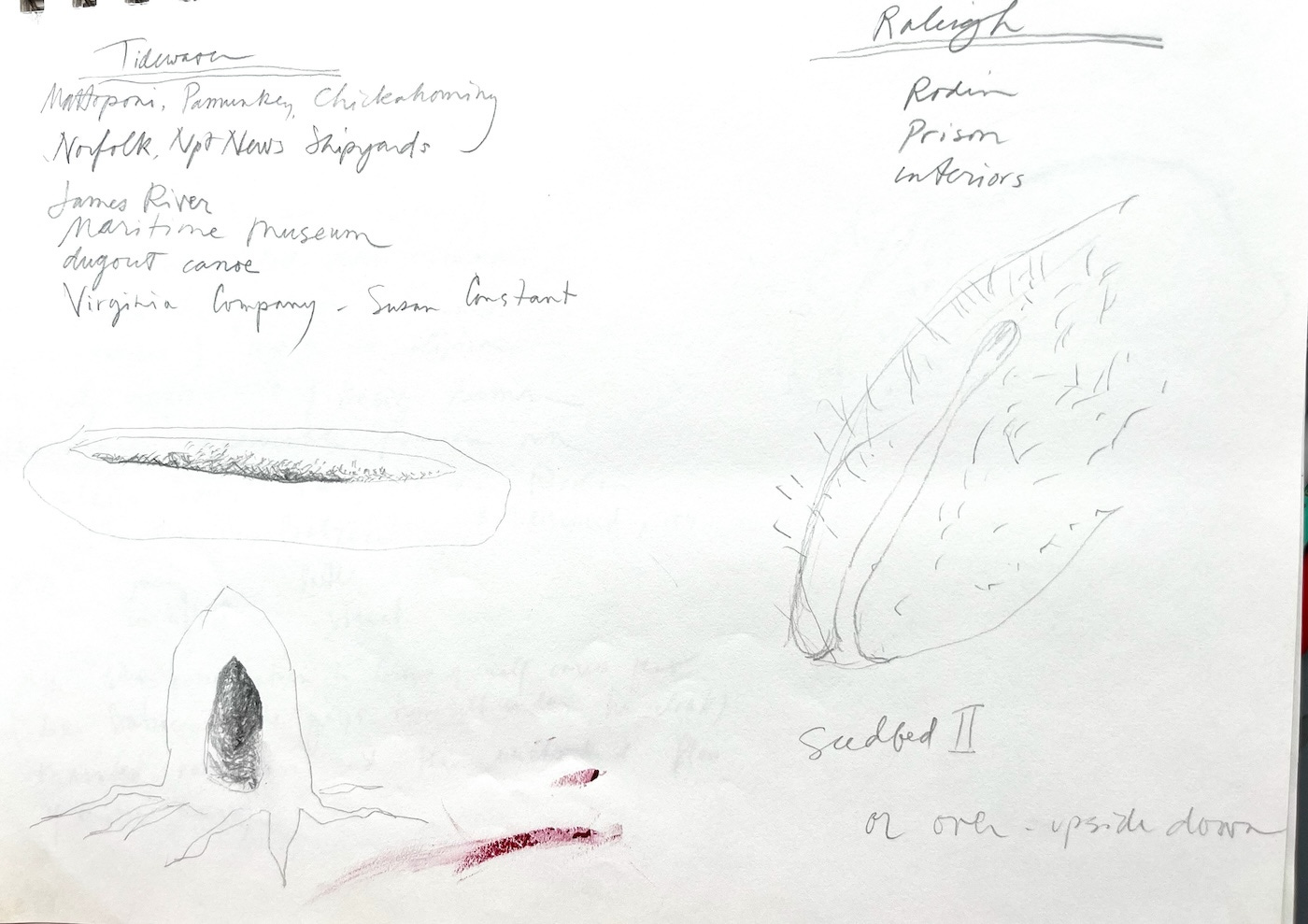
so . . . I thought about wire, woven wire, basket forms,
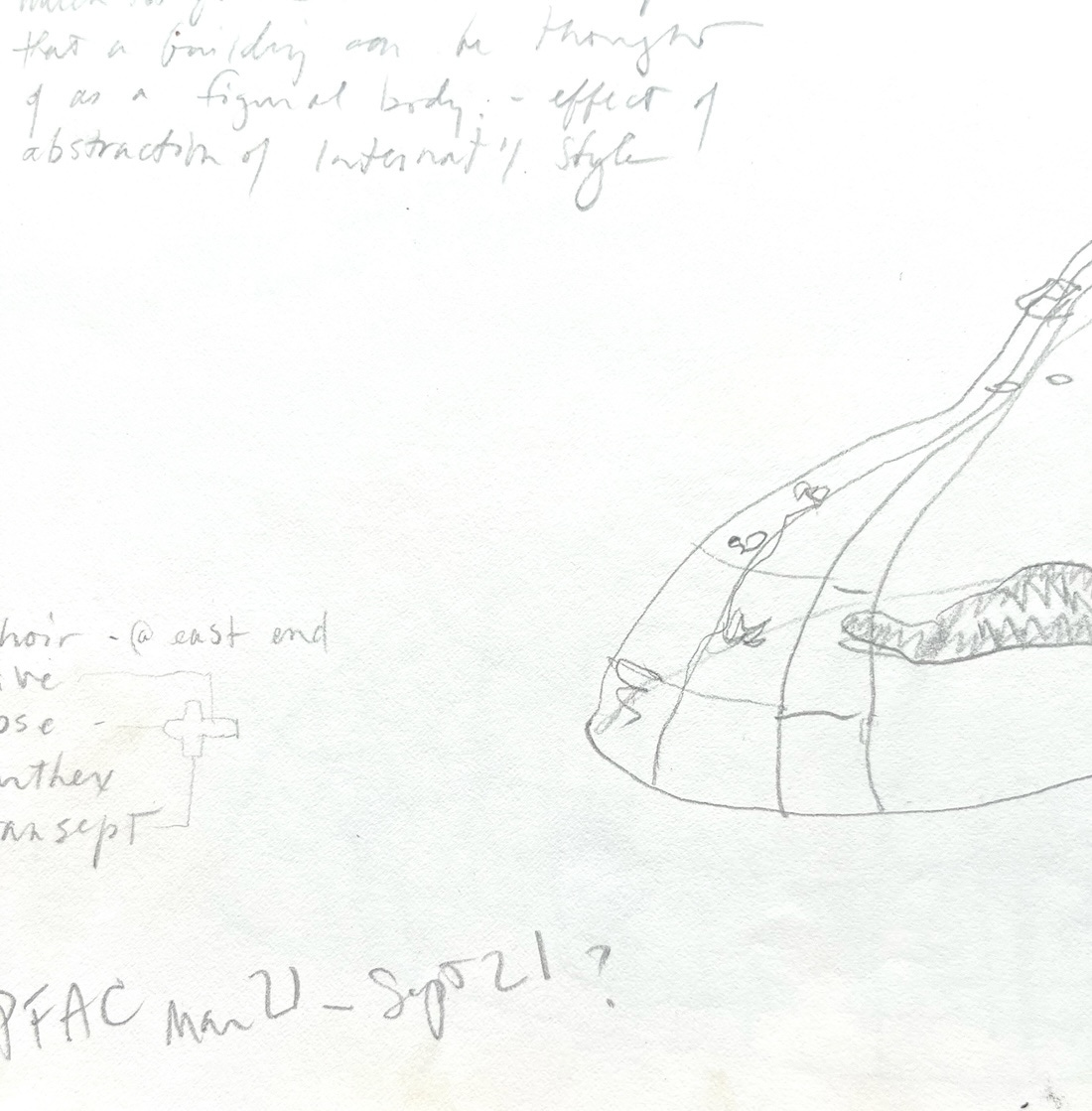
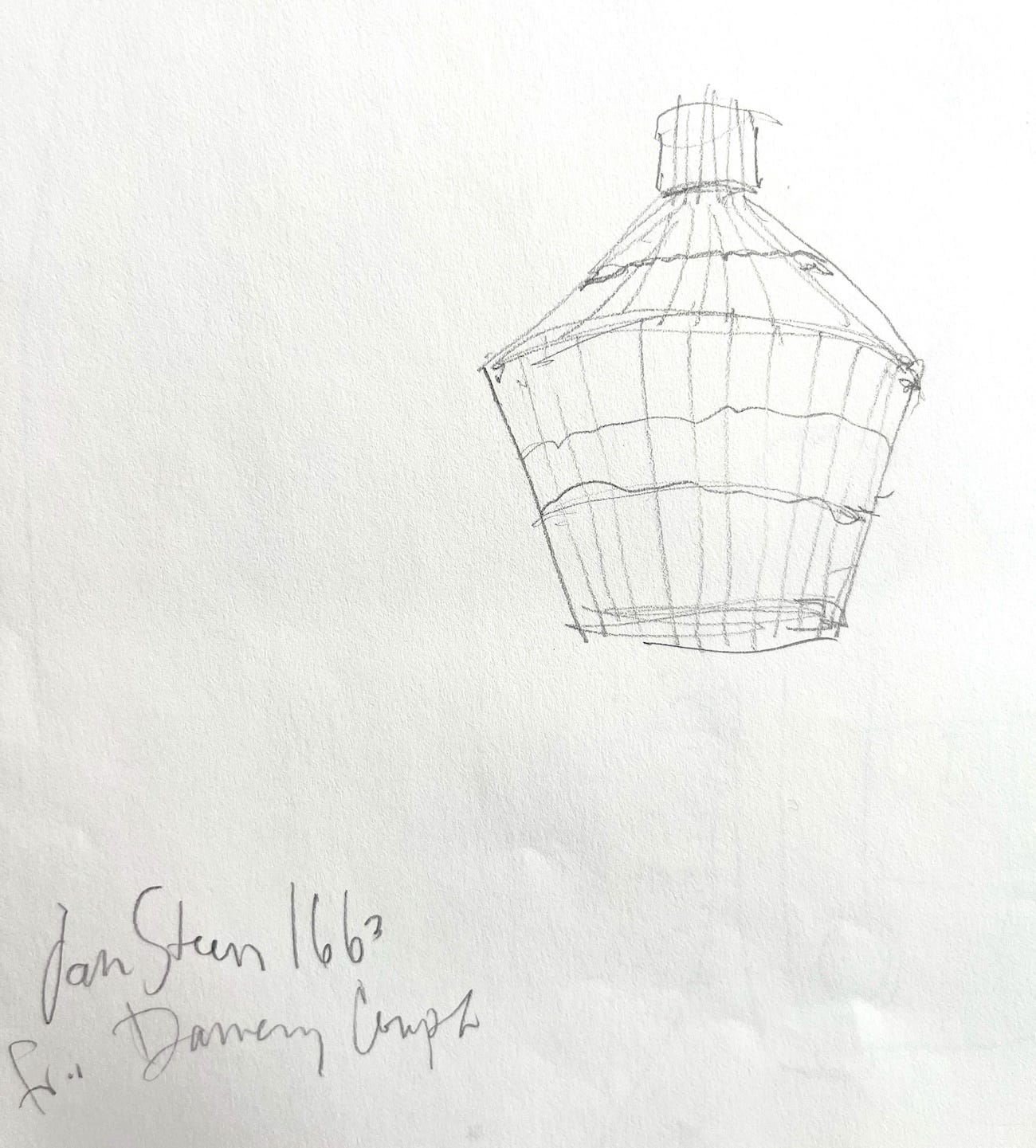
But I was also doing research for the show at the NCMA that was going to run at the same time as a big show of the work of Auguste Rodin, so I was looking deeply at him.
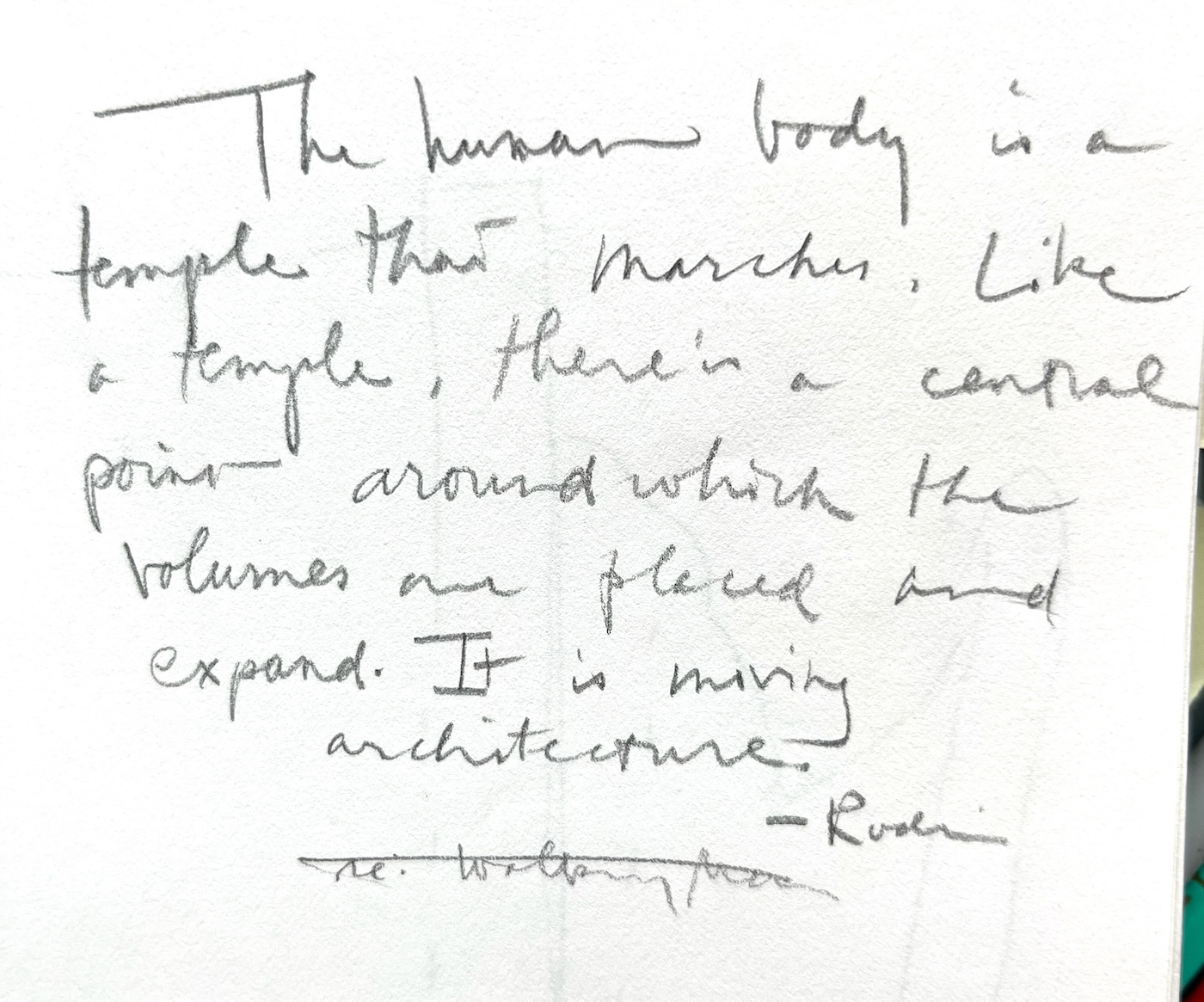
The human body - moving architecture. Nice. I looked at art history for guidance about the human body and the ways in which its proportions draw the eye and the psyche
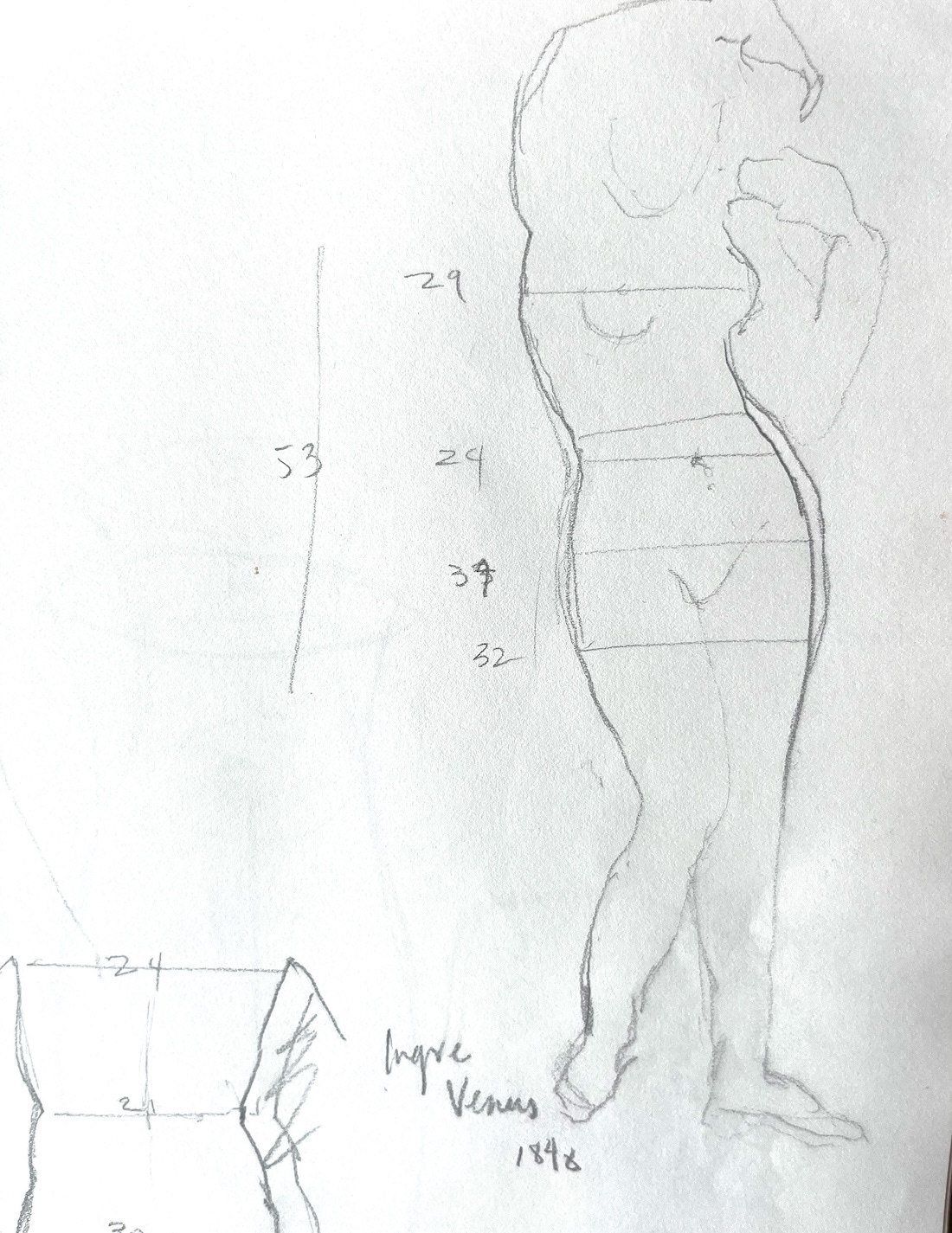
the other Auguste–the ethereal Ingres, and then Il Divino himself, Michelangelo . . .
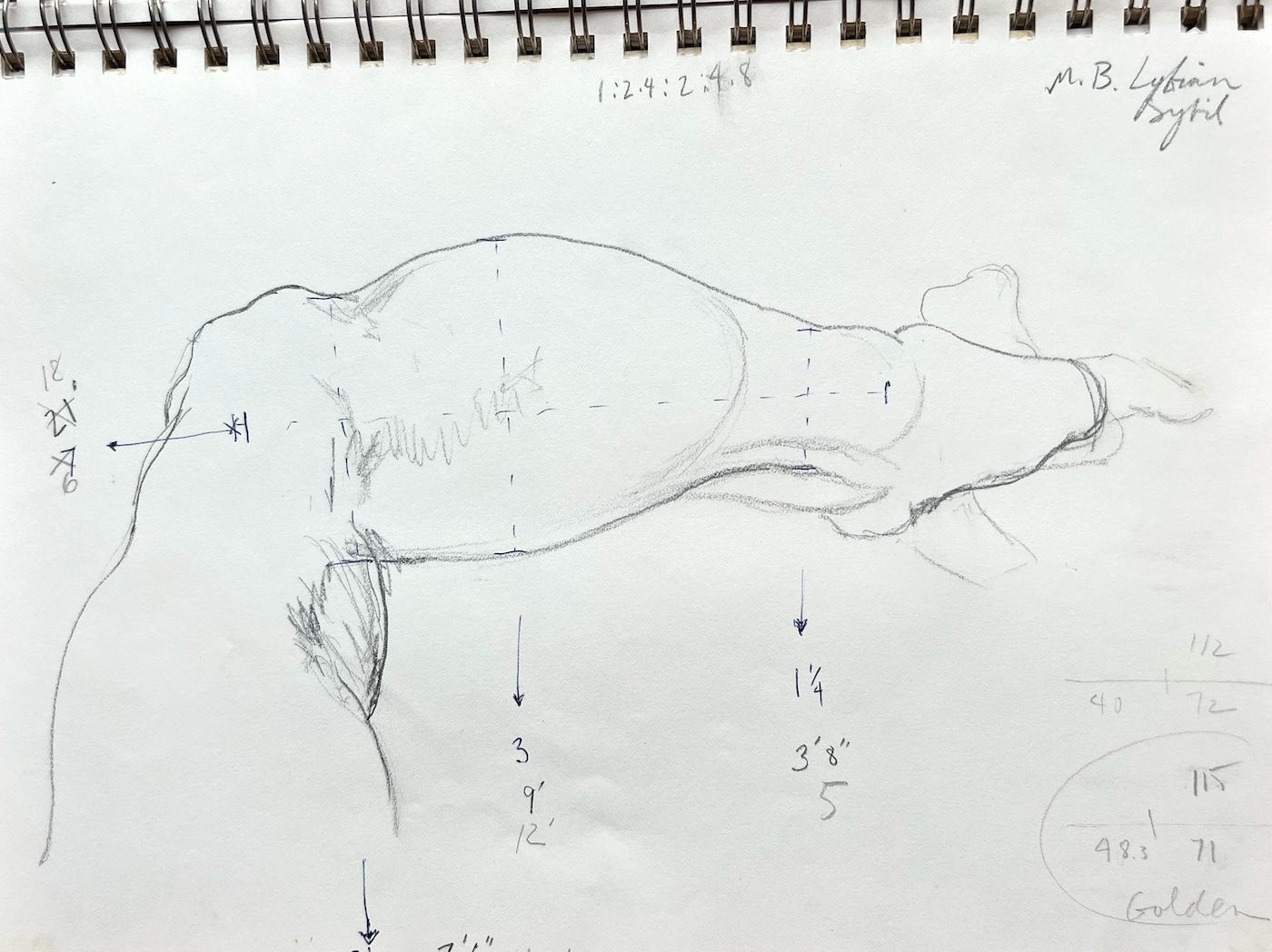
the beautiful drawings for the Lybian Sybil
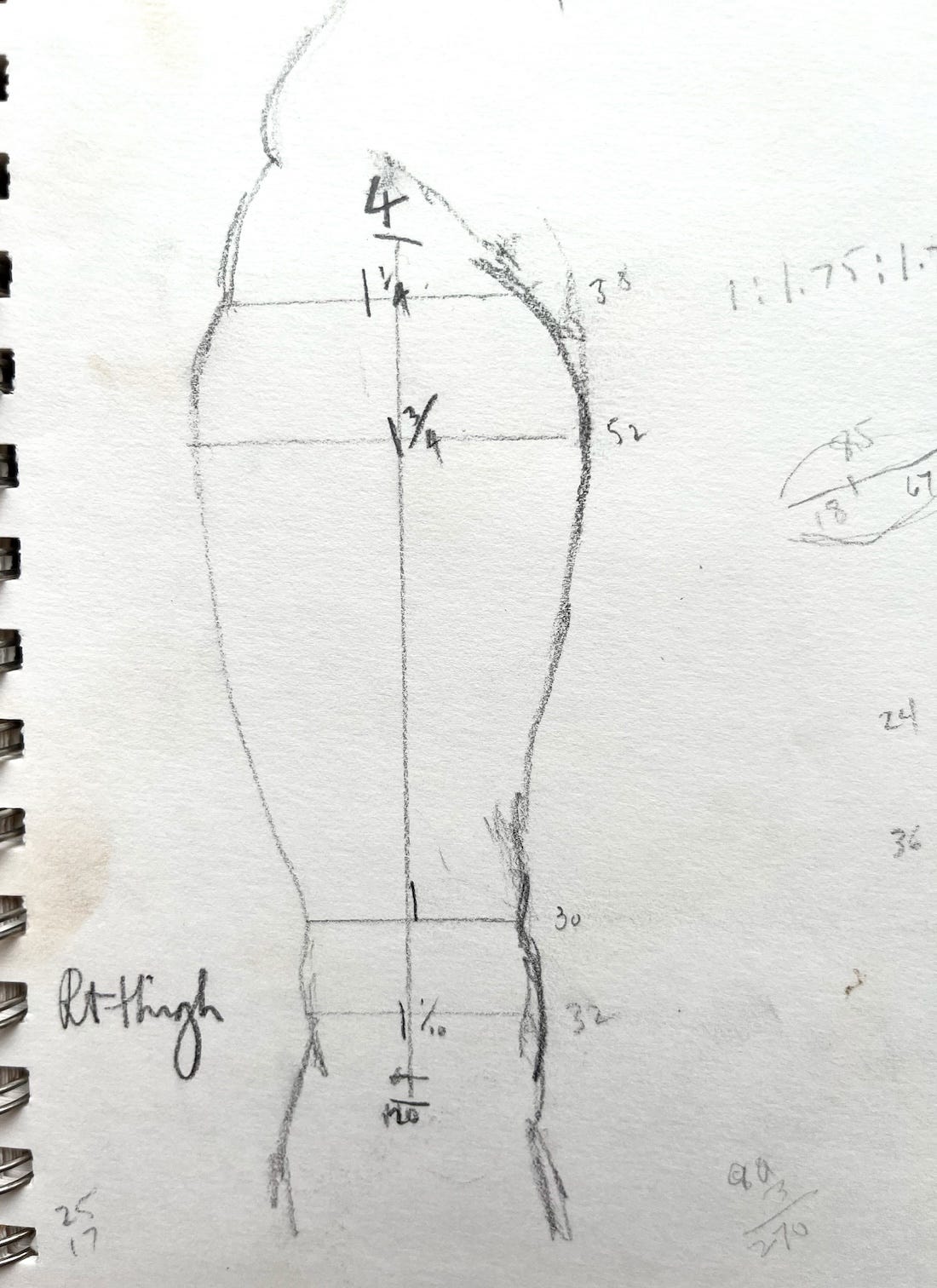
and the iconic David, looking at M.B.’s use of the golden mean
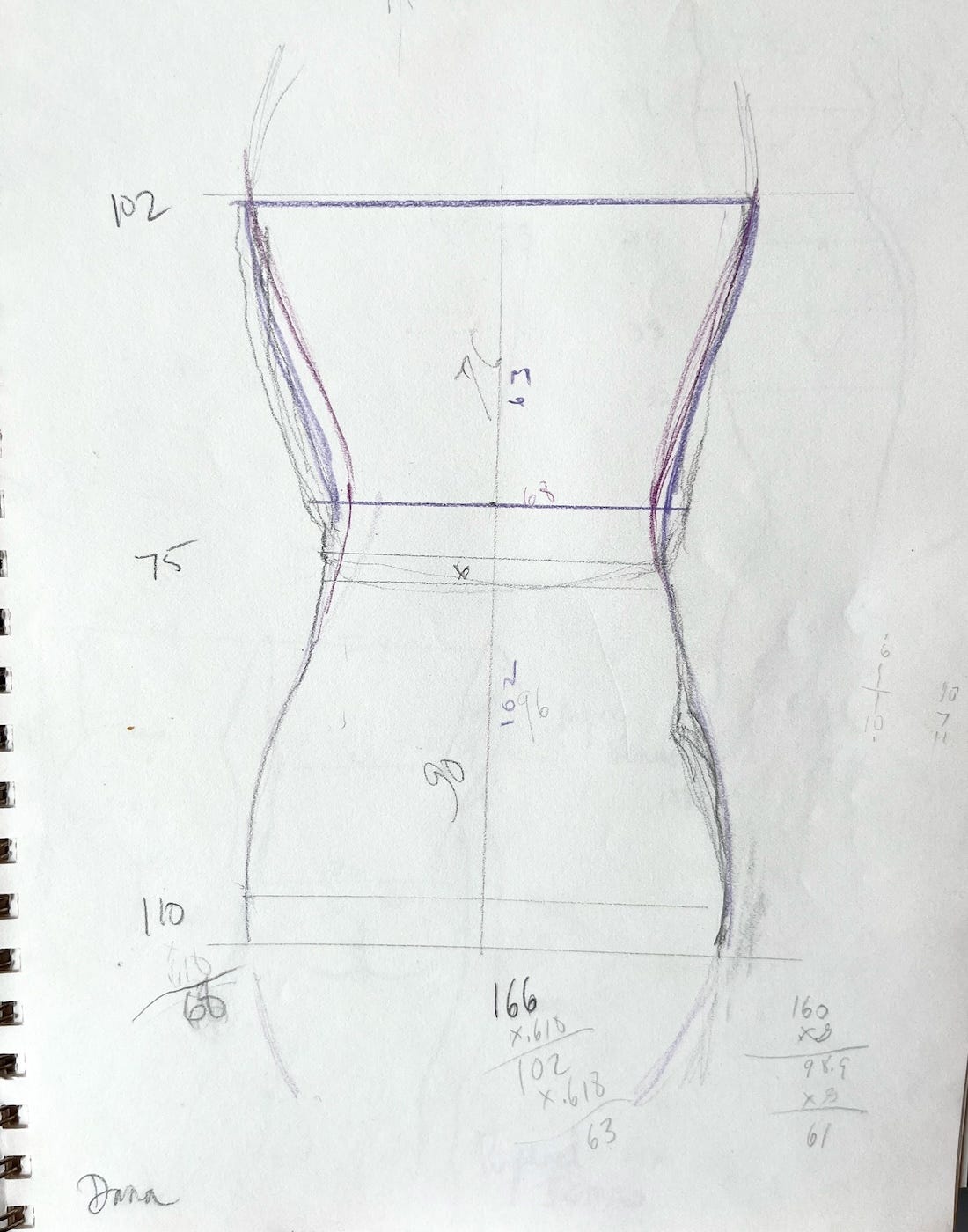
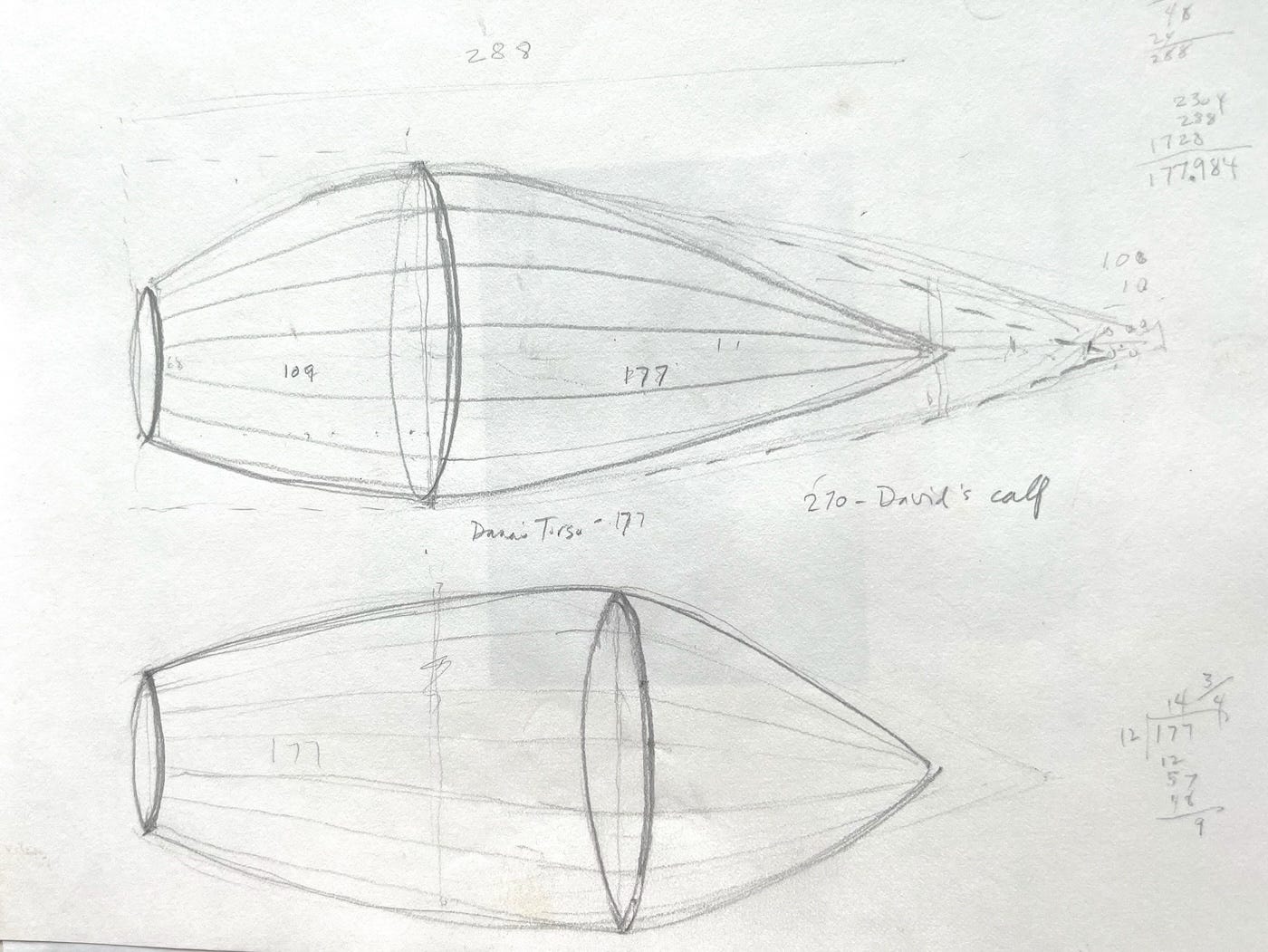
and finally from their real source, the living, breathing torso of a twenty-year-old co-worker - the moving architecture of the human body. And then I realized that in tidewater Virginia I would have ready access to the wonderful structural material of bamboo. I combined that with the method of building wooden curves I had learned from the Clemson architectural research and ended up with the piece you see in the drawing below and the headline image above.
As always, Craig, a fascinating look at an artist's process and product. And I understand completely the bewilderment of looking back at one's early years as an artist and wondering how on earth one managed to be so productive, especially while tending to the needs and pleasures of a family and a job. Yet every season has its own flowering, of course. I remind myself of the hidden gems of winter, the wintersweet and viburnums and witch hazel, especially lovely for appearing against the backdrop of an otherwise dormant garden.
I love the connection between the shelter-building of the Eastern Woodland culture and Rodin's approach to the human body. And Spawn is one of my favorites among many of your works.